Reveal
Potential
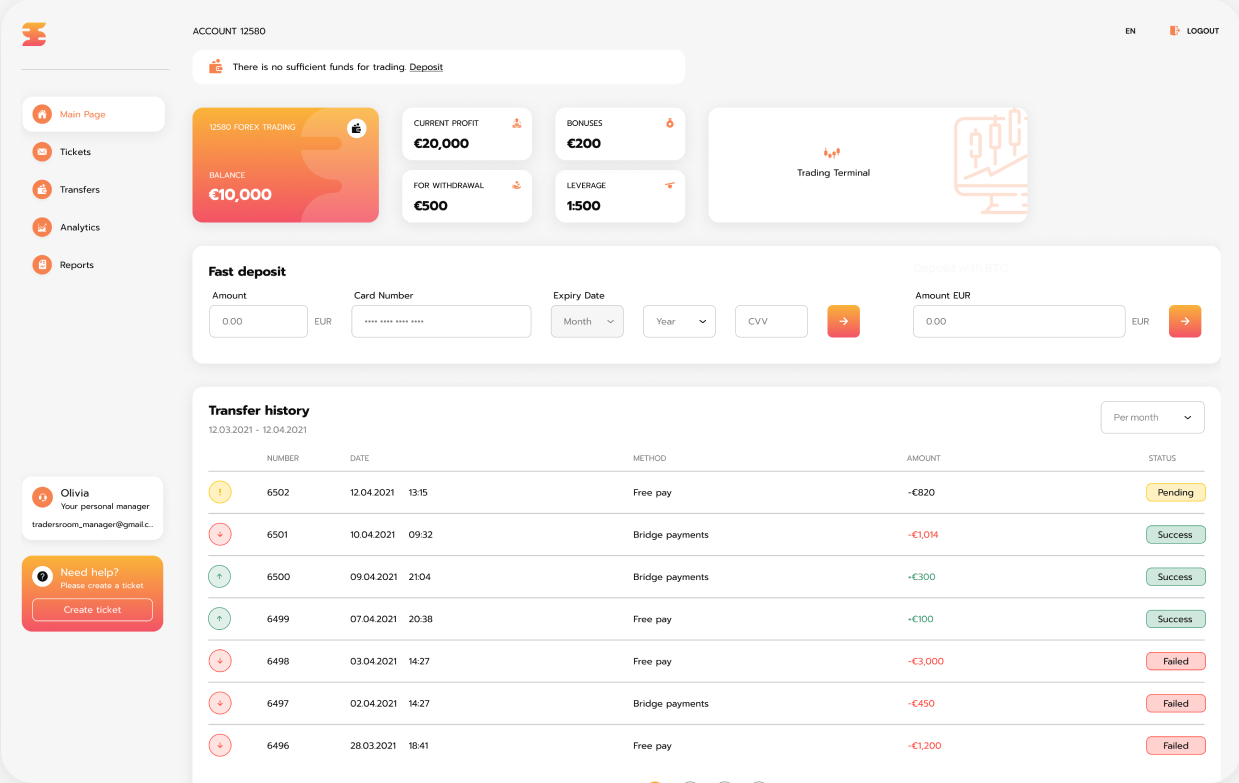
Reach the heights of trading with us! We offer a wide range of trading accounts suitable for traders of all levels.
Get Started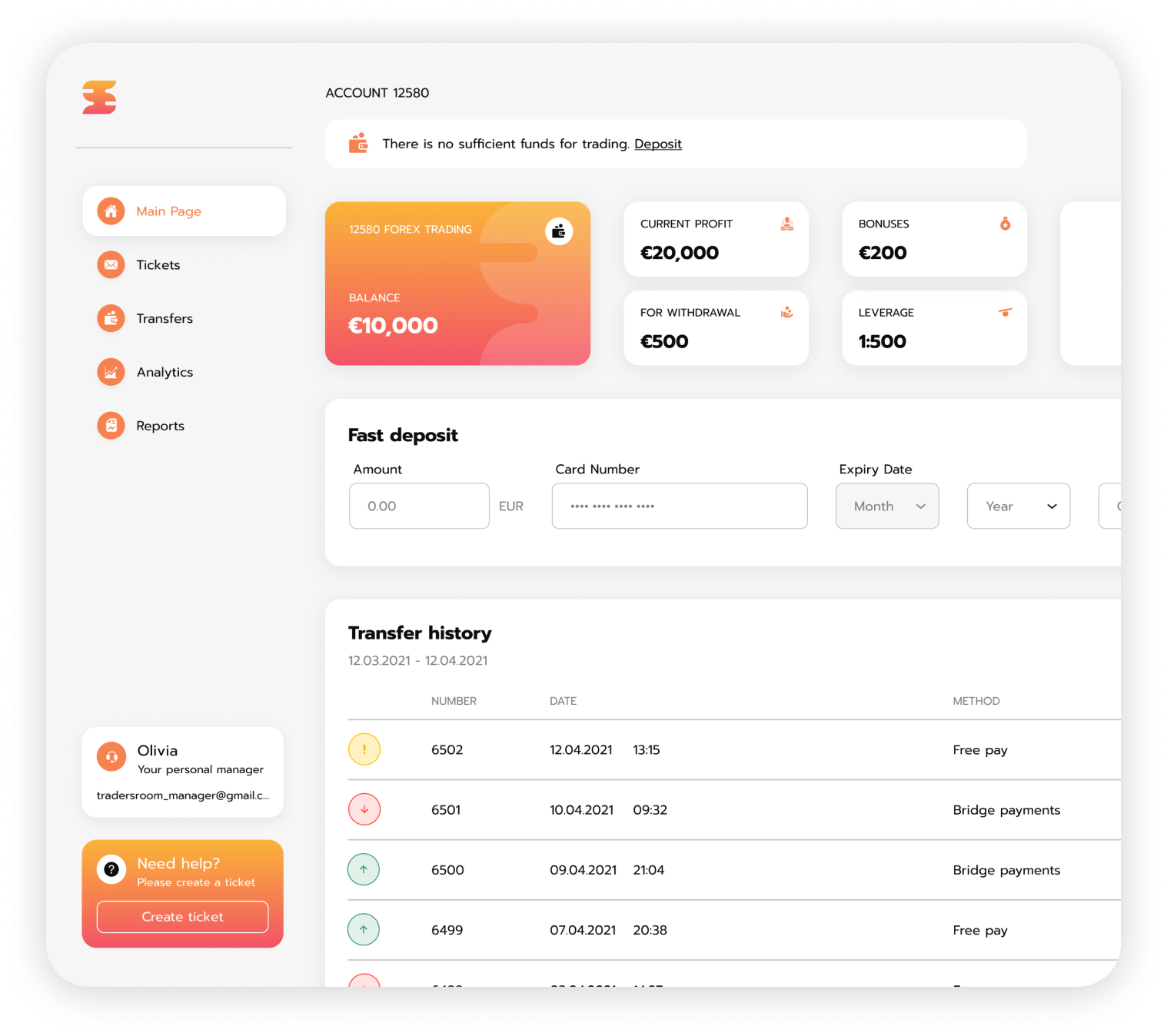
First steps
How to Start Earning
1step
Think
Consider several ways to earn money on the exchange. Assess their advantages and disadvantages. Choose among them the most suitable for you.
2step
Choose
Find several tools on our platform for investing and choose among them the most suitable one. Register and open a minimum deposit.
3step
Earn and Learn
Try different approaches, learn from your actions, gain experience. Analyze your steps, work on your mistakes, improve your skills and strategies.
Features
Open a World of New Financial Opportunities
Investments
Explore a wide range of trading instruments, carefully selected for their high liquidity, allowing you to make optimal investment decisions.


Analytics
Gain access to exclusive market research empowering you to learn how to predict chart movements alongside our team of traders.


VIP Club
Join an international community of traders and unlock privileges that are typically unavailable to the majority of market participants.


Safety
The real-time margin calculation system reflects the market revaluation of all client positions, ensuring an accurate risk.


Explore a variety of options and trade with confidence, taking advantage of global market trends and making informed investment decisions.

Custom reports
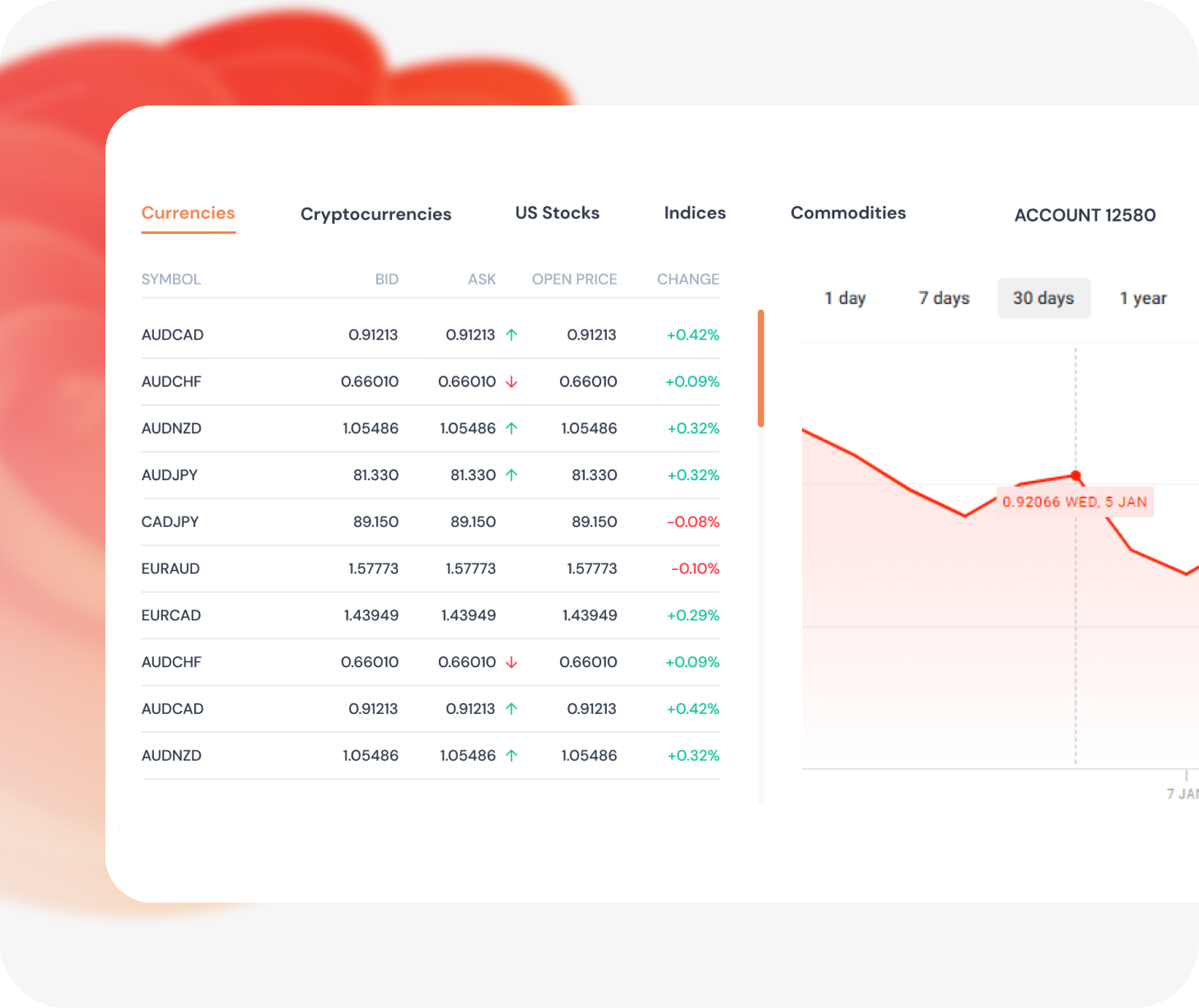
Personalized Reports Customized for Your Needs
Every trader has unique requirements for analyzing and monitoring their trading activity. That's why our company provides customized reports specifically tailored to each client's needs. Our team of professionals works closely with traders to create personalized reports that highlight performance metrics, market analysis or visualization of specific data.
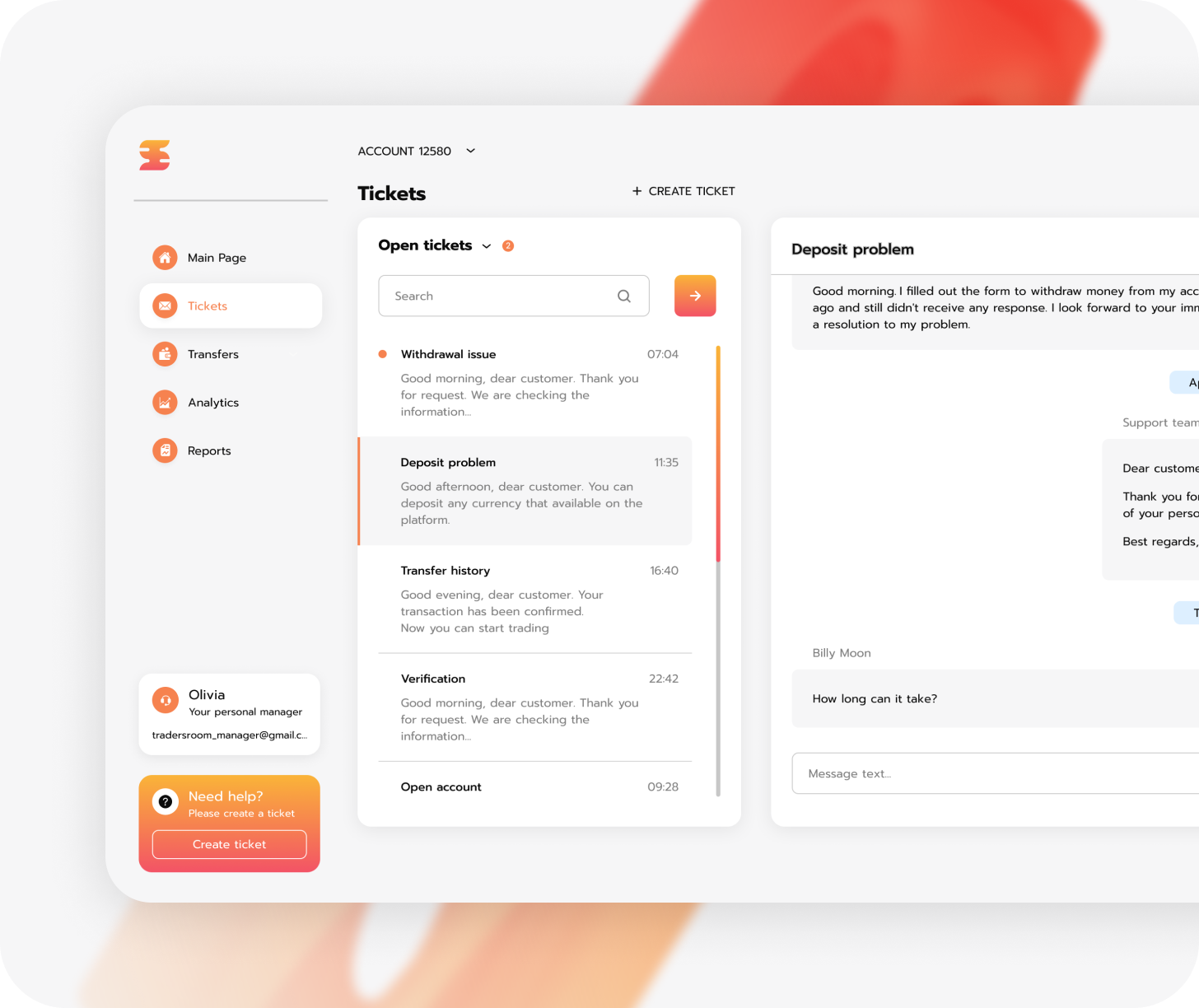
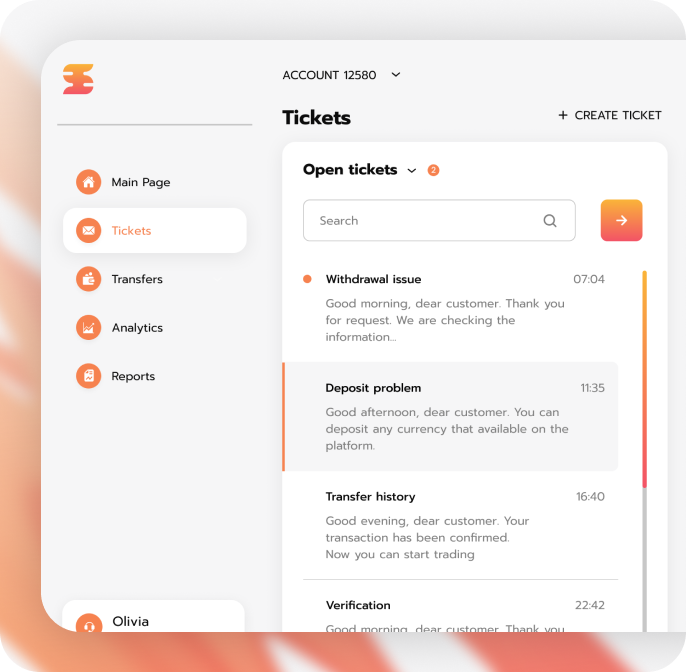
Personalized support
Comprehensive Support Service for Every Trader
Our company prioritizes effective communication with clients, providing a professional support service to address all financial inquiries related to trading. Our team of experts is always available to assist with any questions and ensure seamless trading experiences.

News
Stay Up to Date With the Trends and Happenings

11.05.2026
Crypto.com Launches In-App Travel Booking
Partnership with Bookit: Expanding Travel-based Experiences for Crypto.com Users
Crypto.com, a leading digital currency exchange, has announced a strategic partnership with Bookit, designed to elevate the platform's VIP trader benefits. This collaboration is hailed as a "major expansion of Crypto.com's Level Up" program, underscoring the app's commitment to providing enhanced user benefits. The introduction of travel and luxury "experiences" that can be booked using the Crypto.com app signifies a pivotal shift in how users might leverage digital assets for real-world applications.
Unlocking Travel and Luxury Opportunities
With this new service, Crypto.com users gain the ability to book travel experiences and purchase luxury items directly through their accounts. While the program includes access to hotel bookings, it goes beyond to offer event tickets and luxury purchases via participating brands like Sony, Callaway, and Bose. This diverse offering caters to a wide array of user interests, signifying Crypto.com's strategy to diversify utility for its digital currency.
Exclusive Access through Level Up Subscribers
The new app functionality is currently exclusive to "Level Up" subscribers on the Crypto.com mobile platform. This service offers an impressive inventory with over a million global listings, capturing opportunities in hotels, flights, cruises, car rentals, and live experiences. By opting into the base Level Up benefits program, which is free, users can access these listings. However, enhanced features are available through subscription tiers such as "Plus" and "Pro." The "Plus" option reduces trading fees for $4.99 monthly, while the "Pro" subscription offers up to 5% APY on cash deposits for $300 annually.
Aligning with Global Travel Trends
American Express's 2026 Global Travel Trends Report highlights the burgeoning interest in experience-based travel, particularly among younger vacationers. Elements like lodging, conference spaces, and tours are increasingly included in comprehensive VIP travel bookings reminiscent of traditional "all-inclusive" packages. Crypto.com’s initiative aligns seamlessly with these trends, attracting a new generation of cryptocurrency traders who use platforms like Crypto.com, Coinbase, and Robinhood as primary financial tools.
Proprietary Benefits: Attracting New Subscribers
This movement is part of a broader trend where exchanges enhance proprietary benefits programs to draw new subscribers. Robinhood, with a "Gold" subscriber base surpassing 4 million, and Coinbase with its premium service Coinbase One, illustrate the lucrative opportunities that subscription models represent for cryptocurrency exchanges. By offering more tangible benefits tied to everyday spending and luxury purchases, platforms deepen user engagement and foster loyalty.
Premium Membership and Cashback Opportunities
As expected, the most lucrative perks within the Crypto.com Travel program are earmarked for “Pro” and “Private” levels. These premium members can receive up to 6% cashback in CRO, the app’s virtual currency, by stacking purchases. This not only provides a financial incentive but also stimulates user participation in the Crypto.com ecosystem.
The Future of Digital Asset Utility
"Crypto.com Travel represents another important step in expanding real-world utility for digital assets," noted COO Eric Anziani in the official press release. This initiative enhances what is arguably the most comprehensive rewards program in the crypto sector. By adding real-world travel benefits through CRO, Crypto.com underscores its innovative approach to bridging the gap between digital finance and everyday lifestyle needs.

08.05.2026
How AI Is Transforming Cryptocurrency Trading in the Web3 Era
The Rapid Transformation of the Cryptocurrency Market
The cryptocurrency market has changed dramatically over the last few years. What started as a niche digital experiment has now become a global financial movement powered by blockchain technology, decentralized systems, and innovative fintech solutions. As digital assets continue to gain mainstream attention, traders and investors are searching for smarter ways to navigate the fast-moving market.
The Role of Artificial Intelligence in Crypto Trading
One of the biggest developments shaping the future of crypto trading is artificial intelligence (AI). AI-driven systems are helping traders analyze trends, manage risks, monitor market sentiment, and make faster decisions in an environment that never sleeps. In the modern Web3 economy, AI is no longer just an extra feature -- it is becoming an essential part of how digital asset exchanges operate.
The Growing Complexity of the Crypto Market
Cryptocurrency markets move at an incredible speed. Prices can rise or fall within minutes, influenced by factors such as global regulations, investor sentiment, technological upgrades, and macroeconomic events. Unlike traditional stock exchanges that operate during fixed hours, crypto markets run 24/7.
This constant activity creates opportunities, but it also increases pressure on traders. Monitoring multiple assets across different exchanges can quickly become overwhelming, especially for beginners. Many users struggle to keep up with rapid market changes while trying to make informed decisions.
This is where AI-powered trading systems are making a major difference. Advanced algorithms can process large amounts of market data in real time, helping traders identify patterns and trends that might otherwise go unnoticed.
How AI Improves Digital Asset Trading
Artificial intelligence is transforming the way cryptocurrency platforms operate. Instead of relying solely on manual analysis, traders can now access intelligent tools designed to support decision-making.
AI systems are commonly used for:
- Market trend analysis
- Real-time price monitoring
- Portfolio management
- Risk assessment
- Fraud detection
- Automated trading strategies
- Sentiment analysis from news and social media
These technologies allow users to react more efficiently to changing conditions without constantly watching charts throughout the day.
For example, some AI trading models analyze historical price behavior alongside live market activity to identify possible trading opportunities. While no technology can predict the future with complete accuracy, AI can help reduce emotional decision-making and improve overall strategy planning.
The Rise of AI-Powered Crypto Exchanges
As competition grows in the blockchain industry, digital asset exchanges are focusing on user experience, security, and intelligent trading solutions. Modern platforms are integrating AI tools directly into their ecosystems to provide a more streamlined trading environment.
One example is BitradeX, a platform focused on combining blockchain infrastructure with AI-driven trading technology. Many users exploring the best crypto trading platform options are now paying closer attention to exchanges that offer automation, analytics, and enhanced security features alongside traditional trading services.
How BitradeX AI Bot Supports Smarter Crypto Trading
One feature that has attracted attention to BitradeX is its AI-powered trading bot technology. The BitradeX AI Bot is designed to help users analyze market conditions more efficiently by using artificial intelligence and real-time data processing. Instead of relying only on manual chart analysis, the system can monitor market trends, price movements, and trading signals across multiple digital assets.
The AI bot is built to support traders who want a more data-driven approach to cryptocurrency trading. By combining machine learning with blockchain-based trading infrastructure, BitradeX aims to simplify decision-making in a highly volatile market. The platform's intelligent tools can assist users in identifying potential opportunities, managing risks, and responding more quickly to changing market conditions.
As AI continues to shape the future of fintech and Web3 innovation, platforms like BitradeX are exploring how automation and advanced analytics can improve the overall crypto trading experience while still encouraging responsible and informed investing.
The demand for smarter exchanges reflects a broader shift in the industry. Today's traders are looking for platforms that do more than simply process buy and sell orders. They want systems capable of delivering insights, reducing complexity, and supporting long-term portfolio management.
Why Web3 Is Driving Financial Innovation
Web3 is often described as the next stage of the internet. Unlike traditional online platforms controlled by centralized companies, Web3 applications use decentralized blockchain networks to give users more ownership and control over their digital assets and data.
This shift is influencing many industries, including finance, gaming, digital identity, and online payments. In the crypto sector, Web3 technologies are helping create transparent ecosystems where transactions can be verified publicly and securely.
AI and blockchain together are creating powerful possibilities. Blockchain provides transparency and security, while AI delivers data analysis and automation. Combined, these technologies are helping shape a new generation of fintech services designed for a global digital economy.
Security Challenges in Cryptocurrency Trading
Security remains one of the most important concerns in the crypto industry. Cyber threats, phishing attacks, and exchange vulnerabilities continue to affect both experienced traders and newcomers.
AI is playing an increasingly important role in protecting users and platforms. Intelligent monitoring systems can identify suspicious behavior, detect unusual transaction patterns, and flag potential threats before they escalate.
Some exchanges now use AI-driven risk management tools that continuously monitor account activity to help reduce fraud risks. Machine learning models can also adapt over time, improving their ability to recognize evolving cyberattack methods.
While no platform can eliminate all risks entirely, advanced security technology helps create a safer environment for users participating in digital finance.
The Role of Automation in Modern Trading
Automation has become a major trend in cryptocurrency investing. Many traders now use automated strategies to execute trades based on predefined market conditions.
AI trading bots can help users manage trades even when they are away from their devices. Since crypto markets operate continuously, automation offers a practical way to respond to opportunities across different time zones.
However, responsible trading remains essential. Automated systems are tools designed to support decision-making, not guarantee success. Market volatility can still lead to losses, which is why experienced investors typically combine AI insights with careful research and risk management.
The most effective traders often view AI as a strategic assistant rather than a replacement for human judgment.
How Blockchain Transparency Supports Smarter Investing
One advantage of blockchain technology is transparency. Public blockchain networks allow users to verify transactions and track asset movements openly. This level of visibility is different from many traditional financial systems where information may be limited or delayed.
AI tools can analyze blockchain activity to provide additional market insights. For example, some systems monitor wallet movements, token activity, and trading volume changes to identify emerging trends.
This combination of transparency and intelligent analysis helps investors make more informed decisions while navigating complex digital markets.
Why User Experience Matters in Crypto Platforms
As cryptocurrency adoption expands globally, platforms are competing to make digital trading more accessible to everyday users. A complicated interface or confusing process can discourage newcomers from participating in the market.
Modern exchanges are investing heavily in user-friendly dashboards, mobile applications, educational resources, and simplified trading tools. AI is helping improve this experience by offering personalized insights, automated alerts, and intelligent portfolio recommendations.
The goal is to reduce technical barriers and create an environment where users can better understand their investments without needing advanced financial expertise.
This accessibility is particularly important as younger generations become more involved in decentralized finance and blockchain innovation.
The Future of AI and Cryptocurrency
The relationship between AI and cryptocurrency is still evolving. As machine learning technology becomes more advanced, the capabilities of AI-powered trading systems are expected to grow significantly.
Future developments may include:
- More accurate predictive analytics
- Improved decentralized finance automation
- Smarter portfolio balancing systems
- Enhanced blockchain security monitoring
- AI-powered decentralized applications
- Advanced trading personalization
At the same time, regulation and ethical considerations will continue shaping how these technologies develop. Transparency, data privacy, and responsible AI use will remain important topics across the fintech industry.
What remains clear is that AI is becoming deeply connected to the future of digital finance.
Conclusion
Cryptocurrency trading has entered a new phase driven by artificial intelligence, blockchain innovation, and the rapid growth of Web3 technologies. Investors today face a market that moves faster and generates more data than ever before.
AI-powered platforms are helping users navigate this complexity through automation, analytics, and intelligent trading support. At the same time, blockchain continues to provide transparency and decentralized infrastructure that supports the broader digital economy.
As the industry matures, the integration of AI into cryptocurrency exchanges is likely to become standard rather than optional. Traders are increasingly looking for platforms that combine security, efficiency, and intelligent tools to support smarter decision-making in a constantly evolving market.
The future of digital asset trading will not rely solely on technology alone, but on how effectively users and platforms work together to create secure, informed, and sustainable participation in the global crypto ecosystem.

06.05.2026
Coinbase Q1 Preview: Can Brian Armstrong's Crypto Giant Beat Bearish Expectations? - Coinbase Global (NAS
Will Coinbase Beat Earnings?
Cryptocurrency behemoth Coinbase Global Inc. (NASDAQ:COIN) is set to release its earnings for the first quarter following the market close on Thursday. This will provide an opportunity to assess how the company is navigating current market conditions, particularly given projections indicating that the financial landscape for Coinbase appears challenging at present. Analysts are anticipating a considerable year-over-year decline in earnings per share (EPS) for the firm, with estimates set at $0.26. This equates to an 86% drop from the same period last year and a 60% decrease from the previous quarter.
Furthermore, Coinbase is expected to report a quarterly revenue of $1.70 billion, which also marks a 26% year-over-year decrease. While these numbers seem daunting, it's essential to consider the broader context of the cryptocurrency market, which has seen volatile swings affecting trading volumes and, subsequently, earnings for platforms like Coinbase. Despite these challenges, market participants remain attentive to see whether Coinbase can surpass these modest expectations.
Interestingly, sentiments from the betting markets are notably pessimistic. Polymarket bettors have given Coinbase a mere 5% chance of beating its quarterly earnings estimate, indicating a widespread bearish sentiment prevailing about its immediate financial performance.
COIN Stock Leaning Bearish Or Bullish?
Assessing the sentiment around COIN stock reveals a mixed picture. Currently, 31 analysts have placed a consensus price target on COIN at $307.42, suggesting a bullish outlook despite immediate challenges. However, more recent estimates from financial institutions such as Cantor Fitzgerald, Piper Sandler, and Citizens indicate a slightly lower average price target of $261.67. This revised target still implies a potential upside of approximately 28.83%, reflecting optimism about the stock's future growth.
On the other hand, there are signals warranting caution. Short interest, an indicator of bearish sentiment, increased marginally to represent 12.80% of the company’s publicly available float. Moreover, COIN's Price-to-Earnings (P/E) Ratio stood at 45.62, revealing that investors pay a high premium compared to the past year's earnings, possibly illustrating speculative valuation considering the uncertain market conditions.
Technical analysis offers further insights into market sentiment. The Moving Average Convergence Divergence (MACD) indicator, which is often used to spot changes in the strength, direction, momentum, and duration of a trend, signaled a "Buy" for COIN. Meanwhile, the Relative Strength Index (RSI) was positioned slightly above the centerline at 50, which suggests a "Neutral" stance among traders currently.
Crypto Volumes Decline
The challenges Coinbase faces are symptomatic of wider trends in the cryptocurrency markets. Trading volumes across crypto exchanges have been on a declining path during the first quarter, coinciding with a broader market downturn according to Coinglass data. These trends have critical implications for Coinbase, given its revenue closely ties to trading activity levels. Hence, decreased volumes could translate into diminished revenue and profit margins for the quarter in question.
Ultimately, how these dynamics will influence Coinbase’s financial performance for the first quarter remains to be seen, with clarity expected once it reports its earnings.
Market Performance and Outlook
Despite the headwinds, Coinbase shares saw a modest increase in overnight trading, climbing 1.82% after a 6.14% increase during Monday's regular trading session, closing at $202.99. In the short term, COIN stock has demonstrated strong price gains but has struggled over medium- and long-term horizons. According to Benzinga's Edge Stock Rankings, COIN possesses a very low Momentum score, suggesting tepid investor confidence in sustained upward price movements.
Photo courtesy: Thrive Studios ID on Shutterstock.com
Market News and Data brought to you by Benzinga APIs
For those wishing to stay updated with market insights, you can add Benzinga News as your preferred news source on Google for comprehensive coverage and detailed analysis.

04.05.2026
Bitcoin surges past $80,000 to three-month high as risk rally builds amid liquidity tailwinds
Bitcoin Surges Past $80,000: A Comprehensive Market Analysis
Bitcoin has triumphantly crossed the $80,000 threshold for the first time in over three months, reflecting a broader risk-on sentiment permeating global financial markets. This notable ascent highlights the cryptocurrency's resilience amidst easing liquidity conditions and improved institutional sentiment, propelling it to new heights.
The Recent Rally: Analyzing Bitcoin and Ethereum's Performance
As of Monday, Bitcoin was trading around the $80,147 mark, posting a gain of 2.77 percent, while Ethereum concurrently advanced by nearly 3.5 percent, reaching approximately $2,383 as recorded by the latest market data. This price action underscores a persistent demand for digital assets, despite the uneven macroeconomic conditions that continue to challenge broader market stability.
Institutional Influence: Renewed Interest in Crypto-linked Investments
Contributing to the buoyant market sentiment are significant institutional inflows into crypto-linked investment products. Notably, the Fidelity Wise Origin Bitcoin Fund witnessed fresh inflows amounting to $26.6 million earlier this month, a clear indication of renewed institutional interest and participation within the crypto asset class.
Regulatory Tailwinds: The Impact of the Clarity Act
Adding momentum to the cryptocurrency uptrend are evolving policy developments in the United States. The recent passage of the Clarity Act by the US Senate on May 2 has been positively received by market participants, viewed as a crucial step towards regulatory simplification. This legislative progress is anticipated to encourage more substantial institutional capital flows into the crypto ecosystem, further bolstering market confidence.
Expert Insights: Market Dynamics and Technical Indicators
Nischal Shetty, founder of WazirX, attributes the sustained price action to persistent demand despite the prevailing challenging macro backdrop. He cites regulatory advancements and boosting investor confidence as key drivers behind the recent rally. Shetty points to broader global market trends that support this uptrend, with US technology-heavy indices, such as the Nasdaq, reaching new highs and reinforcing risk appetite across various asset classes.
Technical Analysis: Assessing Bitcoin's Market Position
From a technical perspective, Bitcoin finds itself in a "bullish but slightly stretched" territory, according to Shetty. Momentum indicators like the Moving Average Convergence Divergence (MACD) illustrate the lingering strength in the current upward move. Additionally, the alignment of 10, 20, 50, and 100-day moving averages on the buy side supports the prevailing bullish sentiment, indicating robust market confidence and further potential for price appreciation.
Conclusion: Navigating the Complex Cryptocurrency Landscape
The ascent of Bitcoin past the $80,000 mark signifies more than just a price surge; it represents the dynamic interplay between market sentiment, institutional participation, and regulatory developments. While challenges persist within the macroeconomic environment, the resilience and adaptability of the cryptocurrency market continue to attract investors globally. As the landscape evolves, keeping abreast of both technical indicators and regulatory changes will be crucial for market participants seeking to capitalize on these emerging opportunities.
Want to Be a Part of a New Trading World?
Simply provide us with your email, and our manager will contact you to get started.